Emergency HVAC Repair in TempeArizona
24/7 emergency AC and heating repair from certified local technicians in Tempe, Arizona.
Assess Your HVAC Emergency
Identify the severity of your issue and take the right action
Monitor & Schedule
- Weak or uneven airflow
- Unusual noises (buzzing, rattling)
- Thermostat not responding correctly
- Slight temperature inconsistency
Call Today
- No cooling or heating output
- System short-cycling repeatedly
- Strange smells from vents
- Water leaking from unit
Call Now — Emergency
- Gas smell near furnace
- Electrical burning smell
- Complete system failure
- Carbon monoxide alarm triggered
Why HVAC Emergencies Happen in Tempe
Tempe's climate puts extreme stress on HVAC systems. Understanding local conditions helps you prevent failures.

Photo by Mary Brennan on Unsplash
Extreme summer heat regularly exceeds 110°F, forcing AC to run 12+ hours daily
Temperature differential of 40+ degrees between outdoor and desired indoor temps
Desert dust and monsoon debris clog filters and reduce system efficiency
Best Months
Avoid if Possible
- AC accounts for 40-50% of summer energy bills in Arizona
- Higher SEER2 ratings provide significant long-term savings
- Variable-capacity systems offer substantial annual savings over single-stage units
- Smart thermostats can reduce cooling usage by raising temperature when away
- Proper insulation reduces HVAC load significantly
The impact of this relentless heat on HVAC equipment cannot be overstated. Standard air conditioners are designed to cool indoor air approximately 20 degrees below outdoor temperatures. When Tempe's mercury climbs past 110 degrees, systems must run nearly continuously to maintain comfortable indoor conditions. This extended operation accelerates wear on compressors, causes refrigerant overpressure in condenser coils, and strains fan motors beyond their typical design parameters. As a result, HVAC systems in Tempe typically last only 10-12 years compared to the 15-20 year national average.
Beyond the heat, Tempe's desert climate presents additional challenges. The arid environment carries significant dust, sand, and pollen that rapidly accumulates in air filters and on evaporator coils. During monsoon season from July through September, dust storms known as haboobs can deposit thick layers of debris throughout the valley, requiring more frequent filter changes and professional coil cleaning. The low humidity, while making summer heat more bearable, can dry out rubber seals and crack electrical insulation within HVAC components, leading to refrigerant leaks and system failures. Homeowners must also contend with attic temperatures that can exceed 150 degrees on summer days, causing substantial duct heat gain that forces systems to work even harder to deliver cool air to living spaces.
How Tempe's Climate Affects Materials
compressor
Runs longer cycles in extreme heat, accelerating wear and increasing failure risk
condenser Coil
High ambient temps make heat exchange difficult, causing refrigerant overpressure
filters
Desert dust requires monthly replacement vs. standard 90-day intervals
ductwork
Metal expansion/contraction causes joint failures and air leaks
Your Home Temperature Risk
When your HVAC fails in Tempe, indoor temperatures can reach dangerous levels
In Tempe's heat, a broken AC can push indoor temperatures past 100°F within hours. Heat stroke risk increases significantly — especially for children and elderly residents.
(855) 321-3346 — Get Emergency HelpTempe's extreme climate means HVAC systems work harder here than almost anywhere else in the country. This intense demand leads to more frequent failures, often occurring during the hottest days when systems are under maximum stress. Capacitor failures, compressor breakdowns, and refrigerant leaks commonly strike when you need cooling most, making emergency preparedness essential for every Tempe household.
When AC failure occurs during extreme heat, take immediate steps to protect your family while waiting for emergency repair. Close blinds and curtains to block solar heat gain, use fans to circulate air, stay hydrated, and consider relocating temporarily to a cooling center or air-conditioned business if indoor temperatures become unsafe. The City of Tempe and Arizona State University operate cooling centers during extreme heat events.
Several Tempe HVAC contractors offer true 24/7 emergency service for after-hours AC failures. Accurate Air Conditioning, with over 60 years of service to the Tempe community, provides round-the-clock emergency response with NATE-certified technicians. AirTime Cooling and Heating offers same-day emergency service with honest approaches and fair treatment. One Hour Heating and Air Conditioning maintains a 24/7 emergency hotline specifically for Tempe-area customers facing urgent cooling failures.
Emergency repair situations require quick diagnosis and honest assessment. Reputable contractors provide upfront information about the issue before beginning work and never take advantage of customers' desperate situations. Common emergency repairs include capacitor replacement, refrigerant recharging, contactor replacement, and fan motor replacement. More serious issues like compressor failure may require system replacement rather than repair, and quality contractors will explain all options clearly.
HVAC Systems We Repair in Tempe
Central air conditioning systems remain the most prevalent choice for Tempe residences, offering whole-home cooling through established ductwork infrastructure. For Arizona's demanding climate, systems with a minimum SEER2 rating of 15.2 are essential, though units rated 17-20 SEER2 provide substantially better long-term value through reduced energy consumption. Variable-capacity compressors represent the premium option, automatically adjusting output to match cooling demand rather than cycling on and off like traditional single-stage systems. This modulating capability delivers superior comfort, better humidity control, and significantly reduced wear on components.
Heat pump systems have gained remarkable popularity in Tempe, offering both cooling and heating capabilities within a single unit. These systems excel in Arizona's mild winter climate while providing efficient summer cooling, and they qualify for enhanced utility rebates from both SRP and APS. Federal tax credits may also apply for qualifying heat pump installations, making them an increasingly attractive option for environmentally conscious homeowners seeking comprehensive climate control.
Ductless mini-split systems represent the fastest-growing segment of the Tempe HVAC market, particularly appealing for specific applications where traditional ducted systems prove impractical or inefficient. These systems are ideal for older homes lacking existing ductwork, room additions, converted garages, and situations where different family members prefer different temperatures. Mini-splits offer exceptional efficiency because they eliminate the substantial energy losses associated with ductwork running through scorching attic spaces where temperatures can exceed 150 degrees. For homes near Arizona State University with student housing additions or converted living spaces, mini-splits provide flexible, zone-controlled comfort without the complexity of extending existing duct systems.
Package units, which combine heating and cooling components in a single outdoor cabinet, remain common in Arizona homes with limited indoor mechanical space. These all-in-one systems simplify installation and maintenance while enduring direct exposure to Tempe's extreme outdoor conditions. When selecting any system type, proper sizing through Manual J load calculations proves critical, as undersized units run constantly without achieving comfort while oversized systems short-cycle, causing premature wear and humidity issues.
HVAC Repair Requirements in Tempe
Reputable licensed contractors handle the entire permitting process on behalf of homeowners, submitting applications through the Tempe Citizen Access Portal and coordinating required inspections. Processing typically takes one to five business days for standard residential HVAC permits, though complex installations may require additional review time. Inspections verify that installations meet code requirements, protecting both immediate safety and long-term system performance.
Working without permits creates significant risks for homeowners. Unpermitted installations can void manufacturer warranties, create complications during home sales when buyers request permit history, and potentially result in required removal and reinstallation of non-compliant work. When selecting a contractor, confirm they will pull all necessary permits and arrange for inspections as standard practice. This commitment to proper permitting reflects professional standards and protects your investment in new HVAC equipment.
Choosing a HVAC emergency technician in Tempe
Look for contractors whose technicians hold NATE certification, the industry's leading credential for HVAC professionals. Factory-authorized dealers for brands like Trane, Lennox, Carrier, and Bryant receive specialized training and can offer extended warranty coverage. Quality contractors perform Manual J load calculations to properly size your system rather than simply matching the tonnage of your existing unit, which may have been incorrectly sized originally.
Request written estimates from at least three contractors and be wary of bids significantly lower than competitors, as this often indicates corner-cutting on equipment quality, installation practices, or permit compliance. Professional contractors provide detailed written proposals, pull all required permits, schedule inspections, and offer warranties on both equipment and labor. Given Tempe's extreme summer temperatures, prioritize contractors offering 24/7 emergency service, as AC failures during triple-digit heat can quickly become dangerous situations.
Local Insights
The ASU Area surrounding Arizona State University represents one of Tempe's most unique HVAC markets. High-density student housing, apartment complexes, and rental properties dominate this neighborhood, where landlords bear responsibility for maintaining reliable air conditioning systems. The summer months between semesters see reduced occupancy, making this an ideal time for property managers to schedule system replacements and major maintenance. When students return in August, functional AC is not a luxury but an absolute necessity for retention and satisfaction.
South Tempe offers newer construction with family homes typically equipped with properly sized 2-3 ton central AC systems. These neighborhoods benefit from more modern building codes and energy efficiency standards, though even newer systems face the relentless challenge of Arizona's extreme heat. Many South Tempe homeowners invest in smart thermostats and high-SEER2 systems to manage cooling demands during peak summer months.
North Tempe near Papago Park presents an interesting mix of property ages, including charming mid-century homes that often suffer from outdated ductwork running through scorching attics. These older homes are excellent candidates for ductless mini-split installations, which can provide efficient zone-controlled cooling without the energy losses associated with aging duct systems. The proximity to Papago Park and the Desert Botanical Garden means homeowners in this area also contend with additional desert dust and pollen that requires more frequent filter maintenance.
If your system is showing warning signs of failure, schedule preventive maintenance immediately rather than waiting for complete breakdown. Many emergency failures could have been prevented with timely professional inspection. When emergencies do occur, call for professional help immediately and take steps to keep your family safe while waiting for the technician to arrive. In Tempe's extreme heat, quick action protects both your comfort and your health.
Verified HVAC technicians
Certified emergency technicians serving Tempe, Arizona. Available 24/7 for AC and heating emergencies.
Accurate Air Conditioning
Family-owned since 1965, BBB certified, 24/7 emergency service
Larson Air Conditioning
4.9 · 648 reviews
AirTime Cooling and Heating
4.9 · 150 reviews
Team AIR-zona
4.9 · 200 reviews
Around the Sun Heating & Cooling
4.9 · 30 reviews
True North Air Conditioning
4.8 · 205 reviews
+ 1 more HVAC technicians
More HVAC technicians in Tempe
One Hour Heating & Air Conditioning
24/7 emergency after-hours service available in Tempe
Ready to Get Started?
Connect with a licensed HVAC emergency technician in Tempe — available 24/7 for emergencies.
(855) 321-3346 — Emergency ServiceQuick Troubleshooting Guide
Try these steps before calling. If they don't work, we're here 24/7.
Check your thermostat settings
Make sure it's set to the correct mode (heat/cool) and the temperature is set correctly.
If this doesn't work ↓
Inspect your air filter
A clogged filter can restrict airflow and cause your system to overheat or freeze up.
If this doesn't work ↓
Check the circuit breaker
A tripped breaker can cut power to your HVAC system. Reset it and see if the system restarts.
If this doesn't work ↓
Check the outdoor unit
Make sure the outdoor unit is clear of debris and the fan is spinning when the system runs.
Still not working? Call a pro.
(855) 321-3346 — Emergency ServiceComplete Tempe Emergency HVAC Repair Guide
Everything you need to know about emergency hvac repair in Tempe. Expand any section for details.
Interior Signs
- Hot spots or uneven temperatures throughout the home
- Humidity problems - air feels muggy despite AC running
- Unusual odors when system runs (musty, burning, chemical)
- Excessive dust accumulation even with new filters
- System runs constantly but home doesn't cool properly
Exterior Signs
- Unusual noises from outdoor unit (grinding, squealing, banging)
- Ice formation on refrigerant lines or evaporator coil
- Visible rust or corrosion on condenser unit
- Refrigerant leaks (oily residue around connections)
- Condenser fan not spinning or making noise
25% Rule: If your system is over 10 years old in Arizona's climate and repair expenses are significant relative to replacement value, or if it uses R-22 refrigerant, replacement is typically the better investment. Systems requiring frequent repairs (2+ per year) or those that can't maintain comfortable temperatures should be evaluated for replacement.
Tempe at a Glance
Local climate conditions and neighborhoods where HVAC emergencies are most common

Downtown Tempe / Mill Avenue
Downtown Tempe Mill Avenue bridge at night with city lights and Tempe Town Lake
Photo by Andrew Ruiz on Unsplash

ASU Area
Arizona State University campus sign and memorial steps
Photo by Avi Waxman on Unsplash
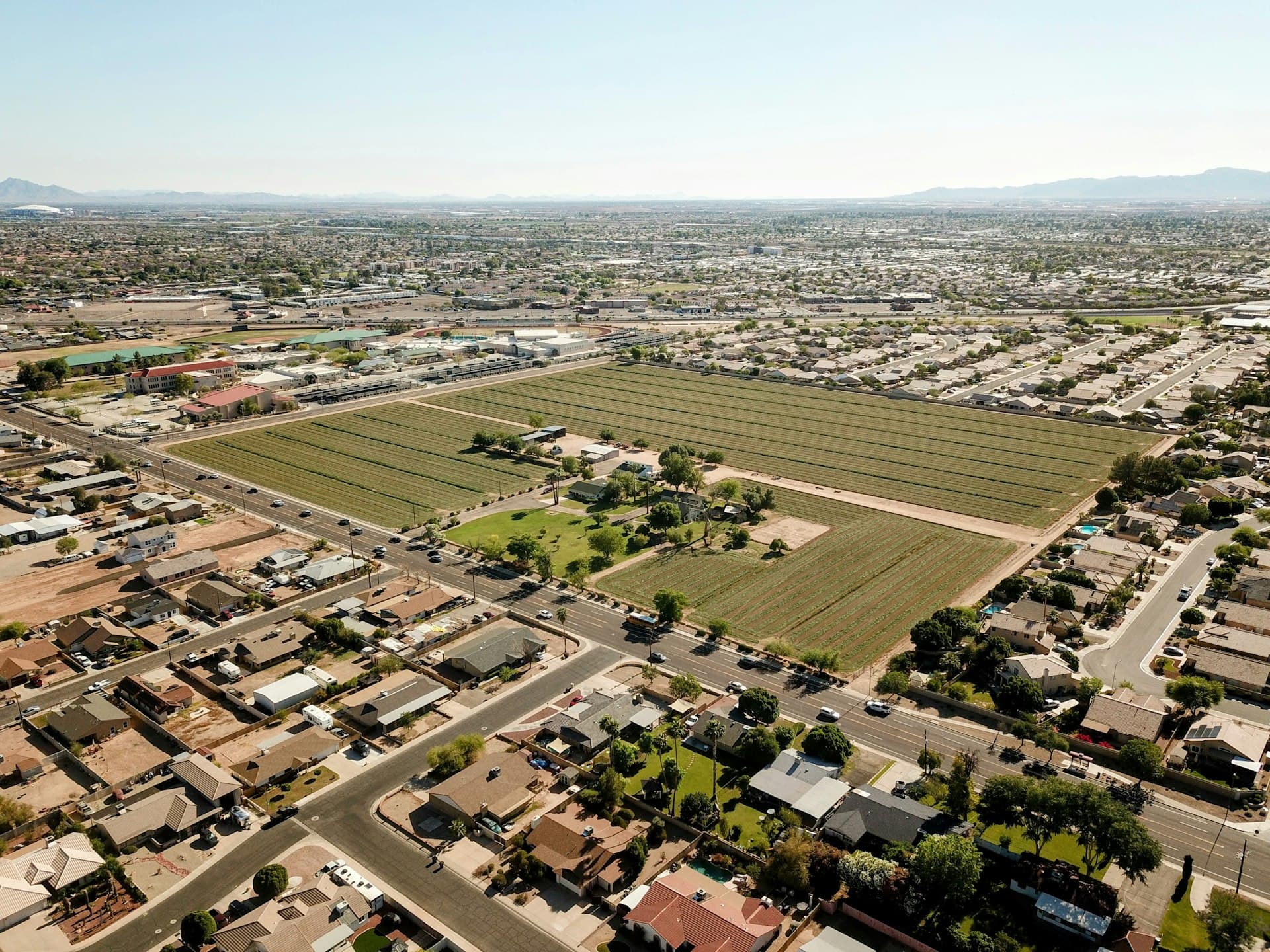
Residential Area
Aerial view of Phoenix Metro residential neighborhoods and suburban homes
Photo by Avi Waxman on Unsplash
Local Climate
Lightning strikes over Phoenix Arizona city skyline during monsoon thunderstorm
Photo by Mary Brennan on Unsplash

Local Landmark
Papago Park red rock formations near Tempe Arizona at golden hour
Photo by Tim Chow on Unsplash
Frequently Asked Questions
Common questions about emergency HVAC repair in Tempe, Arizona
Still have questions? Call our 24/7 emergency line.
Call (855) 321-3346More Cities in Arizona
Emergency HVAC repair in nearby AZ cities
Need Emergency HVAC Repair?
Call now for 24/7 emergency AC and heating repair in Tempe, Arizona. Licensed, insured professionals available around the clock.
(855) 321-3346 — Emergency Service