Emergency HVAC Repair in AustinTexas
24/7 emergency AC and heating repair from certified local technicians in Austin, Texas.
Assess Your HVAC Emergency
Identify the severity of your issue and take the right action
Monitor & Schedule
- Weak or uneven airflow
- Unusual noises (buzzing, rattling)
- Thermostat not responding correctly
- Slight temperature inconsistency
Call Today
- No cooling or heating output
- System short-cycling repeatedly
- Strange smells from vents
- Water leaking from unit
Call Now — Emergency
- Gas smell near furnace
- Electrical burning smell
- Complete system failure
- Carbon monoxide alarm triggered
Why HVAC Emergencies Happen in Austin
Austin's climate puts extreme stress on HVAC systems. Understanding local conditions helps you prevent failures.
Hot, humid summers with temperatures regularly exceeding 100F (record 106F)
Humidity levels often exceed 70% during summer months, straining AC systems
Extended cooling season (6-8 months of AC usage)
Best Months
Avoid if Possible
- Texas minimum SEER2 is 14.3 for central AC; 15 SEER2 now federal minimum
- Higher SEER2 ratings (17+) save up to 30% annually on cooling costs
- Heat pumps must meet minimum HSPF2 of 7.5 for heating efficiency
- Austin Energy rebates available for systems meeting efficiency tiers
- Peak ERCOT demand occurs mid-to-late afternoon in summer; smart thermostats help
The extended cooling season puts significant strain on HVAC equipment, accelerating wear on compressors, fan motors, and other critical components. Systems in Austin typically have shorter lifespans of 10 to 15 years compared to the national average, making regular maintenance essential rather than optional. The humidity factor adds another layer of complexity, as standard air conditioners may cool the air without adequately removing moisture, leaving homes feeling clammy even when the thermostat reads a comfortable temperature.
While Austin winters are generally mild, the city learned a hard lesson during Winter Storm Uri in February 2021. The unprecedented freeze caused widespread HVAC failures, burst pipes, and left hundreds of thousands without heat for days. This event transformed how Austin homeowners think about their heating systems, with many now prioritizing freeze protection features and backup heating capabilities that seemed unnecessary before.
ERCOT grid reliability also factors into HVAC decisions in Austin. Peak demand during summer afternoons strains the Texas electrical grid, making energy-efficient systems and smart thermostats valuable tools for both reducing utility bills and supporting grid stability. Homeowners who invest in high-SEER equipment and programmable controls can shift their cooling loads away from peak demand periods while maintaining comfort.
How Austin's Climate Affects Materials
Standard A C
Works well but may struggle with humidity removal during monsoon season
High- S E E R A C
Variable-speed units provide better humidity control for Austin climate
Heat Pump
Excellent choice for Austin's mild winters; provides year-round comfort
Ductless Mini- Split
Good for zone cooling and homes without ductwork
Your Home Temperature Risk
When your HVAC fails in Austin, indoor temperatures can reach dangerous levels
In Austin's heat, a broken AC can push indoor temperatures past 100°F within hours. Heat stroke risk increases significantly — especially for children and elderly residents.
(855) 321-3346 — Get Emergency HelpAustin's extreme heat puts HVAC systems under tremendous stress, and breakdowns often happen at the worst possible times during peak summer afternoons when every contractor in the city is fielding emergency calls. Knowing what to do when your system fails, which warning signs indicate serious problems, and how to find reliable 24/7 help can mean the difference between a few hours of discomfort and days of dangerous heat exposure.
The good news is that Austin has numerous reputable HVAC companies offering genuine 24/7 emergency service with no extra charges for evening or weekend calls. Being prepared before an emergency strikes helps you respond quickly and avoid problems from less scrupulous operators.
Uneven cooling throughout your home, weak airflow from vents, or a system that cycles on and off frequently without maintaining temperature all indicate problems requiring prompt attention. A sudden spike in your electricity bill often reveals your system is working much harder than normal to maintain comfort, suggesting developing issues.
When your AC stops working in the Austin heat, take immediate steps to protect your household. Close blinds and curtains to block solar heat gain. Use fans to circulate air and create wind chill effect. Move to the lowest level of your home where temperatures stay cooler. Stay hydrated and watch for signs of heat exhaustion.
Several Austin HVAC companies provide reliable emergency service. Fox Service Company offers 24/7 availability with no extra charges for evenings or weekends and comprehensive diagnostics to quickly identify problems. Precision Heating and Air provides no-surcharge 24/7 emergency service with licensed NATE-certified technicians. Elite Air Conditioning and Plumbing maintains 24/7 availability for both residential and commercial emergencies with same-day service.
For emergency situations, contact a licensed contractor immediately and describe your symptoms clearly. Most reputable companies can dispatch technicians within hours during normal conditions, though wait times may extend during heat waves when demand spikes. Having an established relationship with a trusted contractor often means faster response when emergencies occur.
HVAC Systems We Repair in Austin
Central air conditioning remains the dominant choice for Austin homes, but efficiency ratings matter significantly here. Standard systems rated at 14-16 SEER2 work adequately for cooling, but higher-efficiency units rated 17 SEER2 and above provide superior humidity control through variable-speed operation. These premium systems can reduce annual cooling demands by up to 30 percent, a substantial benefit over a 6-month cooling season. Variable-speed compressors run longer at lower capacity, removing more moisture from the air and maintaining more consistent temperatures throughout the home.
Heat pumps have gained significant popularity in Austin due to the mild winter climate. Unlike traditional AC and furnace combinations, heat pumps provide both cooling and heating by transferring heat rather than generating it. For Austin's climate where heating needs are minimal, heat pumps represent an excellent efficiency choice. They operate more effectively in moderate temperatures, making them well-suited to Central Texas winters while providing powerful cooling during summer months.
Ductless mini-split systems offer flexibility for homes without existing ductwork, room additions, or areas that need independent temperature control. These systems provide efficient zone cooling without the energy losses associated with ductwork. They are particularly popular in older East Austin homes or garage conversions where running new ducts would be impractical or would compromise the architectural character of the space.
For any system choice, Austin homeowners should prioritize humidity control features. Variable-speed compressors and two-stage cooling allow systems to run longer at lower capacity, removing more moisture from the air. This capability proves essential during July through September when Austin's humidity peaks and standard single-stage systems often leave homes feeling uncomfortable despite adequate cooling. Systems with dedicated dehumidification modes or whole-house dehumidifier integration provide the best comfort in Austin's challenging climate.
HVAC Repair Requirements in Austin
Processing time generally takes 1 to 5 business days, though this can extend during busy summer months when permit applications surge. Most residential HVAC replacements are straightforward, while new installations or projects involving ductwork modifications may require additional review time. The permit process verifies that equipment sizing, installation methods, and electrical connections meet code requirements.
Reputable HVAC contractors handle the permitting process as part of their service, pulling necessary permits before work begins and scheduling required inspections upon completion. Homeowners seeking Austin Energy rebates face additional requirements, as the utility may conduct post-installation inspections to verify equipment meets efficiency standards. All systems must be sized according to ACCA Manual J methodology or Austin Energy's sizing guidance to qualify for rebates and ensure proper performance.
Homeowners should never work with contractors who suggest skipping the permit process. Unpermitted work can create problems when selling your home, void manufacturer warranties, and potentially create safety hazards. A proper permit also provides documentation that professional installation occurred, which can be valuable for insurance claims or future real estate transactions.
Choosing a HVAC emergency technician in Austin
Start by verifying state licensure through the Texas Department of Licensing and Regulation. All HVAC contractors in Texas must hold a valid TDLR ACR (Air Conditioning and Refrigeration) license, which you can verify online at tdlr.texas.gov/LicenseSearch. The state issues Class A licenses for contractors who can work on any size unit and Class B licenses for those limited to smaller equipment. Reputable companies readily provide their license number. Look for NATE-certified technicians, which indicates advanced training and competency in HVAC installation and service. Companies like The Chill Brothers, Precision Heating and Air, and Elite Air Conditioning have earned strong reputations in the Austin market through consistent quality work and customer service.
Transparent practices distinguish trustworthy contractors from those likely to surprise you with hidden charges. Quality companies provide detailed written estimates after conducting an in-home assessment, not over the phone. They should perform a Manual J load calculation to properly size your system rather than simply recommending the same size unit you currently have.
Austin Energy participation matters for rebate eligibility. Contractors registered with the utility's rebate program know the efficiency requirements and handle rebate applications on your behalf. Ask specifically about multi-year labor warranties beyond the manufacturer's equipment warranty, as this demonstrates confidence in their installation quality. Finally, check Google reviews focusing on recent feedback with detailed experiences rather than just star ratings. Contractors with 4.5 or higher stars and hundreds of reviews have proven track records in the Austin market.
Local Insights
North Austin encompasses established suburban communities with homes ranging from newer construction to systems approaching their 20-year replacement threshold. Many neighborhoods in this area were built during Austin's rapid growth periods and feature standard central AC systems that homeowners are now upgrading to high-efficiency heat pumps to take advantage of Austin Energy rebates and lower operating demands.
South Austin presents a diverse housing stock with many homes constructed during the 1970s through 1990s that are prime candidates for HVAC modernization. These older systems often lack adequate humidity control for Austin's summer conditions, and homeowners frequently report that upgrading to variable-speed equipment dramatically improves indoor comfort.
West Lake Hills attracts homeowners seeking larger luxury properties where zone control systems address the challenge of cooling multi-level homes with varying sun exposure throughout the day. High-end HVAC installations in this area often include whole-house dehumidification and smart home integration.
The rapidly growing communities of Pflugerville and Round Rock feature predominantly newer construction with modern efficient systems already installed, though many builder-grade units benefit from early replacement with premium equipment. East Austin's historic homes require contractors experienced with older construction, where adding or upgrading HVAC systems may involve creative approaches like ductless mini-splits to preserve architectural character while providing modern comfort.
If you are experiencing any warning signs of HVAC trouble, schedule service now before the problem becomes an emergency. The best time to discover your system needs repair is during a routine maintenance visit, not at 2 AM during a heat wave. For immediate emergencies, call a licensed contractor offering 24/7 service and confirm their approach before authorizing work. Your comfort and safety should not wait.
Verified HVAC technicians
Certified emergency technicians serving Austin, Texas. Available 24/7 for AC and heating emergencies.
The Chill Brothers
Known for strong labor warranties and transparent quotes
The Coolest LLC
5 · 400 reviews
Precision Heating & Air
4.9
Elite Air Conditioning & Plumbing
4.9 · 700 reviews
Stan's Heating, Air, Plumbing & Electrical
4.8
Fox Service Company
4.8
+ 2 more HVAC technicians
More HVAC technicians in Austin
Alamo Austin Air Conditioning & Heating
Trusted name in Lakeway and Austin area; knowledgeable about 2025 refrigerant changes
Airco Mechanical
Since 1983, providing Austin residents and businesses with superior heating and AC services
Ready to Get Started?
Connect with a licensed HVAC emergency technician in Austin — available 24/7 for emergencies.
(855) 321-3346 — Emergency ServiceQuick Troubleshooting Guide
Try these steps before calling. If they don't work, we're here 24/7.
Check your thermostat settings
Make sure it's set to the correct mode (heat/cool) and the temperature is set correctly.
If this doesn't work ↓
Inspect your air filter
A clogged filter can restrict airflow and cause your system to overheat or freeze up.
If this doesn't work ↓
Check the circuit breaker
A tripped breaker can cut power to your HVAC system. Reset it and see if the system restarts.
If this doesn't work ↓
Check the outdoor unit
Make sure the outdoor unit is clear of debris and the fan is spinning when the system runs.
Still not working? Call a pro.
(855) 321-3346 — Emergency ServiceComplete Austin Emergency HVAC Repair Guide
Everything you need to know about emergency hvac repair in Austin. Expand any section for details.
Interior Signs
- Uneven cooling or hot spots throughout the home
- Humidity feels high even when AC is running
- Unusual odors (musty smell indicates mold in ducts or drain)
- Weak airflow from vents
- Thermostat not responding or inaccurate readings
- Frequent cycling on and off (short cycling)
Exterior Signs
- Strange noises: rattling, banging, screeching, or hissing
- Ice forming on refrigerant lines or evaporator coil
- Water leaking around indoor unit
- Outdoor unit running constantly
- Visible damage or corrosion on outdoor unit
- Rising energy bills without usage changes
25% Rule: Consider replacement if your system is over 10-12 years old and experiencing frequent issues, or if using outdated R-22 refrigerant. A qualified technician can help you evaluate whether repair or replacement makes more sense for your situation.
Austin at a Glance
Local climate conditions and neighborhoods where HVAC emergencies are most common

Downtown Austin
Austin downtown skyline at dusk with Congress Avenue bridge
Photo by Carlos Delgado on Unsplash

Local Landmark
Texas State Capitol building in Austin framed by oak trees
Photo by Delfina Iacub on Unsplash
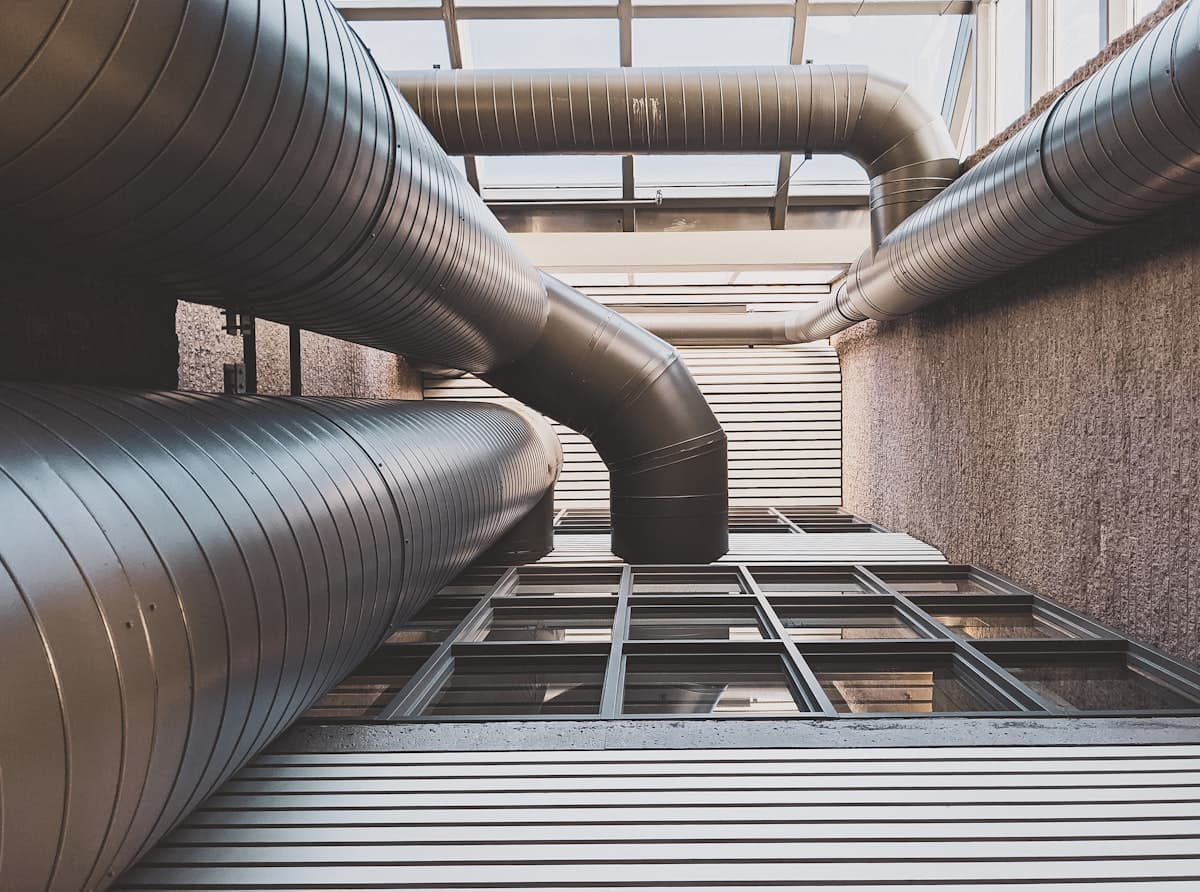
Commercial HVAC ductwork and ventilation system
Photo by Sigmund on Unsplash

Lady Bird Lake
Austin skyline and Lady Bird Lake daytime view with bridges
Photo by MJ Tangonan on Unsplash

Aerial panoramic view of Austin Texas with Colorado River and downtown
Photo by Mitchell Kmetz on Unsplash
Frequently Asked Questions
Common questions about emergency HVAC repair in Austin, Texas
Still have questions? Call our 24/7 emergency line.
Call (855) 321-3346More Cities in Texas
Emergency HVAC repair in nearby TX cities
Need Emergency HVAC Repair?
Call now for 24/7 emergency AC and heating repair in Austin, Texas. Licensed, insured professionals available around the clock.
(855) 321-3346 — Emergency Service